

When you hire a dev team, you make a choice. This choice can make or break your business. A bad website launch costs money. A buggy mobile app destroys trust. A broken custom platform can kill your company.
Manektech’s Software Development Statistics from July 2025 show harsh truths. 83% of software projects cost more than planned. 25% fail because of poor management. 55% of delays happen from last-minute changes. Most disasters happen when businesses don’t know how to hire a dev team properly.
You might be building your first MVP. Alternatively, you could be expanding your digital presence. Or, perhaps you’re updating old systems. Either way, three key questions will help you hire a dev team that delivers results.
Why Bad Hiring Costs Everything
Think about what happens when you hire a dev team that fails. You don’t just lose money. You lose time. You lose customers. You lose trust.
OOne startup paid $50,000 for a mobile app. Unfortunately, the app never worked right. As a result, they had to start over. Their competitors took their market share. Their investors lost faith in the team.
Most failures happen for simple reasons. Businesses focus on price and speed. They ignore the things that matter. Things like project management. Communication systems. Quality control. The three questions below fix these problems.
Question 1: What Problems Like Mine Have You Solved?
This isn’t about portfolios. It’s not about programming languages. It’s about whether they’ve solved your exact problem before. A team that builds online stores will struggle with shipping software. Consumer app builders might not understand business security needs.
Why General Skills Don’t Work
Many businesses make a mistake. They see that a team knows React or Python. They think this means the team can build anything. But software development is more than coding. You need to understand business rules. User behavior. Industry limits.
Expert App Devs says domain knowledge beats technical skills. A developer who knows healthcare rules will build medical apps faster. This beats a smart programmer who has to learn HIPAA from scratch.
When you hire a dev team at Devtrios, you get specialists. We’ve built complex shipping platforms with real-time tracking. We’ve created healthcare apps with HIPAA compliance. This experience helps us spot problems that general teams miss.
How to Check Their Experience
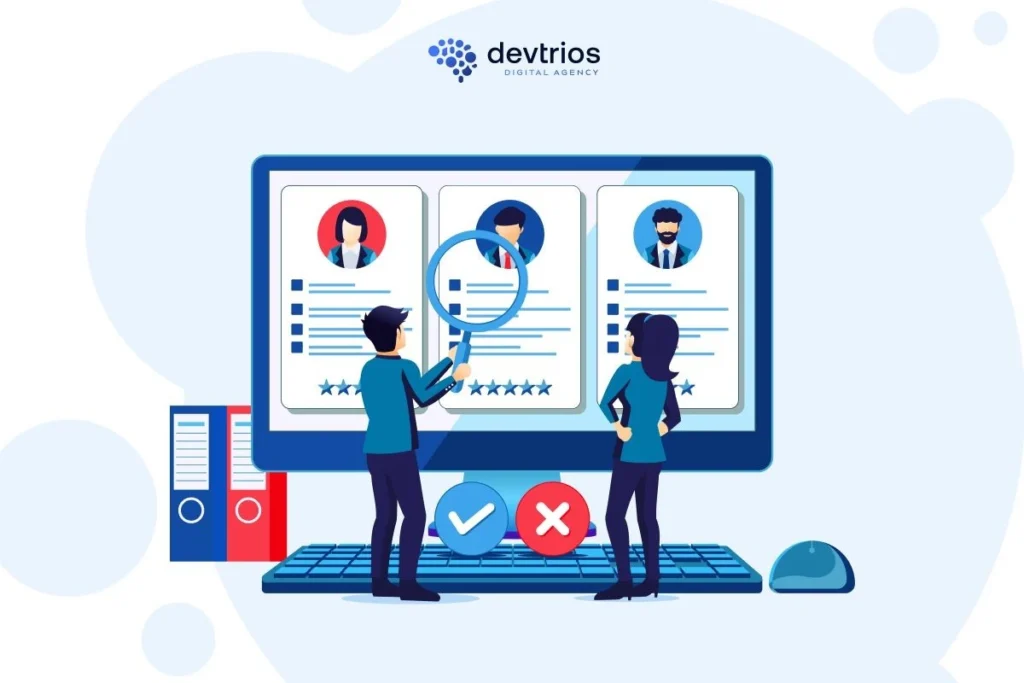
Don’t ask “What technologies do you know?” Ask these questions instead:
What similar problems have you solved? Look for teams that faced your exact issues. Building real-time trading platforms? You need developers who understand fast systems. Not just financial software in general.
Tell me about a project that failed and how you fixed it. This shows problem-solving skills. It shows honesty. Teams that claim they never failed are lying or new.
How would you build my project differently today vs five years ago? This proves they understand how technology changes.
Red Flags to Avoid
Watch out for teams that give unclear answers. According to Maneksoft, developers who can’t explain things simply often don’t understand them. Therefore, if they can’t explain it, they likely don’t understand it.
Also avoid teams that claim they can build anything. Specialists beat generalists. Especially for complex projects.
Prove They’re Telling the Truth
Don’t just trust them. Ask for proof:
- Live demos of similar projects (not screenshots)
- References from similar clients
- Technical docs from relevant projects
- Real metrics from past wins
Toptal says to actually use the apps they built. No working examples? Big red flag.
Learn more about how we choose the right team for each project on our web development services page.
Question 2: How Will You Tell Me When Things Go Wrong?
Notice we said “when,” not “if.” Every project hits problems. The difference between success and failure isn’t avoiding problems. It’s how fast you learn about them and fix them.
Why Communication Wins Projects
Bad communication kills most projects. Developers hit a wall and don’t tell you? Small problems become big delays. They guess what you want instead of asking? You get software that doesn’t work for your business.
BinaryFolks found something important. Projects with good communication finish 40% more often. They stay on time and on budget.
At Devtrios, we use Jira dashboards. We have 24-hour problem alerts. Clients can check project status anytime. Critical issues get immediate attention. No wondering. No waiting days for answers.
What Good Communication Looks Like
Great teams don’t wait for you to ask. They share information first. Look for these things:
Regular updates: Weekly reports. Sprint reviews. Demo meetings. Consistency matters more than frequency.
Fast problem alerts: Teams should tell you about blocks within 24 hours. Plus their solution ideas. Plus timeline effects.
Easy project checking: You should see project status anytime. Through dashboards. Task boards. Project management tools.
Clear contact rules: You need to know who to call when things break. That person should be able to make decisions.
Test How They Communicate
During first meetings, watch how they talk:
- Do they ask smart questions about what you need?
- Do they explain tech stuff in simple words?
- Do they answer emails and messages fast?
- Do they admit when they don’t know something?
Intelivita suggests asking them to explain a hard technical problem they solved. Teams that can’t communicate clearly during sales won’t get better when you pay them.
Ask About Their Tools
Ask specific questions about their setup:
What tools do they use for project management? Look for real platforms like Jira or Asana. Not email chains or casual chats.
How do they handle different time zones? If working with remote teams, they need proven systems for async communication.
Who do you talk to directly? Avoid teams where you coordinate with many developers. You want one person in charge of communication.
How do they write down decisions? Everything important should be documented and available to you.
Check out our communication approach on our mobile app development page.
Warning Signs
Be careful of teams that:
- Promise to “keep you updated” without saying how or when
- Only use email for project talk
- Don’t have project managers
- Can’t show examples of their reports
- Get annoyed by questions
When you hire a dev team, in fact, communication style tells you everything about how they work.
Question 3: What Happens When Your Plan Breaks?
Requirements change. Technology evolves. Business needs shift. Professional teams don’t make perfect plans. They adapt well when plans need to change.
Why Flexibility Beats Perfect Planning
Rigid processes fail in the real world. Sunscrapers found that successful projects change 25% from original requirements. Teams that can’t handle this will either build the wrong thing or charge you extra for every change.
When you hire a dev team at Devtrios, you get test-driven development. We use automated testing. Continuous integration. When requirements change mid-project, we adapt without bugs. Without breaking existing features.
Agile vs Waterfall: Know the Difference
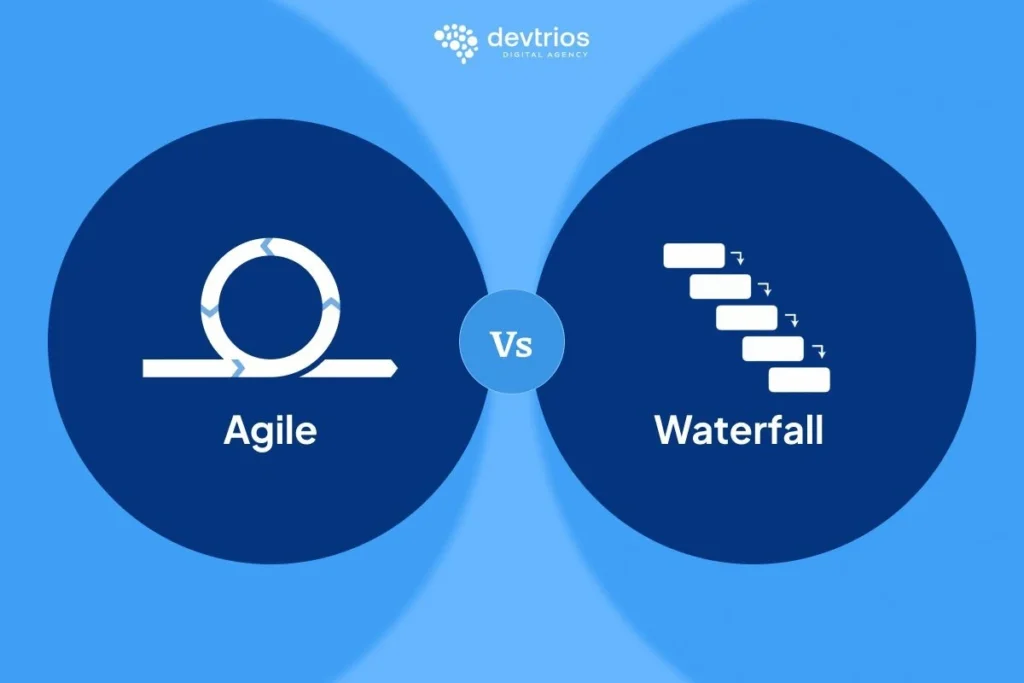
Many teams claim to be “agile.” Few actually know what that means. Agile means: First, building software in small, testable increments. Then, getting feedback often. Next, reprioritizing based on new info. Real agile development includes:
Small builds: Creating software in small, testable pieces. Not trying to build everything at once.
Regular feedback: Showing you working software often. So you can give input before too much work is done.
Flexible planning: Changing priorities based on what you learn during development.
Working together: Finding solutions with you. Not just building your first requests.
Waterfall development plans everything upfront. Then executes step by step. This can work for simple projects with fixed needs. But for most modern software, it fails.
How Good Teams Handle Changes
Ask them to explain their change process:
How do you handle new feature requests? Look for teams that check timeline and budget impact first. Not teams that say “yes” to everything. Or “no” to everything.
How do you decide what’s most important? They should have clear ways to help you choose. When you can’t have everything.
How do you handle technical problems that need scope changes? Sometimes the best solution requires changing the original plan. Good teams help you understand the trade-offs.
Digital Suits says change management separates pros from amateurs.
Quality Control and Testing
Flexibility without quality control creates chaos. Ask about their testing:
How do you make sure new features don’t break old ones? Look for automated testing. Regression testing. Staged rollouts.
How do you approach bug fixes? Bugs happen. But how fast and completely they get fixed varies between teams.
How do you handle testing and quality checks? Some teams expect you to do all testing. Professional teams have structured quality processes.
See our quality approach on our cloud services page.
Technical Debt and Maintenance
Changes and quick fixes create “technical debt.” These are shortcuts that make future development harder. Ask how they balance speed with maintainability:
- Do they regularly clean up code?
- How do they document changes?
- How do they handle framework updates?
- How do they manage security patches?
Other Important Questions
The three main questions above are critical. But other factors can make or break your project:
Code Ownership
Netcorp stresses the importance of code ownership. You should own all custom code written for your project. Including documentation. Including reusable parts made specifically for you.
Team Stability
What happens if key developers leave during your project? Professional teams have knowledge-sharing practices. Documentation standards. These protect you from losing critical information when team members change.
After-Launch Support
Software isn’t done when it launches. Ask about:
- Bug fix policies and response times
- Hosting and infrastructure support
- Future feature development
- Training for your team
- Documentation and handover
Security and Compliance
Your industry might have specific security needs. GDPR. HIPAA. PCI DSS. Make sure the team understands these requirements. Make sure they have experience with proper security measures.
Red Flags That Mean Walk Away
Some warning signs are so bad you should eliminate a team immediately:
They can’t show working examples of previous work. If they claim confidentiality prevents sharing, ask for sanitized examples. Or references you can contact.
They give fixed prices without understanding your needs. Professional development needs discovery and planning. Teams that quote without investigation are inexperienced. Or planning expensive change orders later.
They promise unrealistic timelines. If their estimate is much faster than other qualified teams, they don’t understand the work. Or they plan to cut corners.
They focus more on selling than understanding your needs. Good developers ask more questions than they answer in first meetings.
They can’t explain their process simply. If they hide behind jargon, they probably don’t have a real process.
Making Your Final Choice
After asking these questions, you should understand each team’s abilities. Here’s how to decide:
Compare Real Answers, Not Feelings
Don’t choose based on who you “liked” best. Compare their actual experience. Communication processes. Change management approaches. The team with the most relevant experience and clearest processes is usually safest.
Check References Carefully
LinkedIn resources suggest asking references about communication quality. Problem-solving ability. How teams handled unexpected challenges.
Start Small
If possible, begin with a small project. Test the relationship before committing to something major. This gives you direct experience with their communication and work quality.
Write Everything Down
Document the team’s promises about communication. Change management. Deliverables. This protects both sides and sets clear expectations.
Why Getting It Right Pays Off
Choosing the right team costs more upfront. But it saves money long-term. Professional teams prevent expensive mistakes. They deliver software that works. This reduces costly fixes after launch.
More importantly, the right team becomes a strategic partner. They understand your industry. They anticipate your needs. They suggest improvements you wouldn’t think of yourself.
Your Hiring Checklist
Use this checklist when you hire a dev team:
Experience Check:
- Shows specific experience in your industry/project type
- Provides working examples (not screenshots)
- Offers contactable references from similar projects
- Explains lessons learned from past failures
Communication Check:
- Has structured communication protocols
- Assigns dedicated project manager
- Uses professional project management tools
- Provides clear escalation processes
- Responds quickly during evaluation
Process Check:
- Uses proven project management methodology
- Has structured change management process
- Implements quality assurance and testing
- Documents decisions and maintains code standards
- Plans for post-launch support
Business Check:

- Clarifies code ownership
- Explains team stability and knowledge transfer
- Addresses security and compliance needs
- Provides realistic timelines and clear pricing
- Focuses on understanding your needs
Ready to Hire a Dev Team?
The three questions we covered help you find teams that deliver. Specific experience. Communication processes. Change management. These separate winners from losers.
But remember: the best team for someone else might not be best for you. Your industry, timeline, budget, and technical needs all matter. Use these questions as a starting point. Adapt them to your situation.
Industry research shows businesses that invest time in proper selection save 30% on development costs. They launch 40% faster than those who choose based on price alone.
Success comes down to asking the right questions before you sign contracts. Take time to ask them properly. You’ll dramatically increase your chances of success.
Ready to make the right choice? Use this checklist to evaluate your options systematically. Book a no-obligation discovery call. We’ll walk you through how these principles apply to your specific project. We’ll share relevant case studies. Explain our processes. Help you understand what to look for whether you decide to hire a dev team from us or choose another partner.
Visit our contact page to get started. Or explore our UI/UX design services to see how we’ve helped other businesses make the right hiring decisions.
The most expensive development team is the one that doesn’t deliver working software. Choose based on capability and fit, not just cost. You’ll be much more likely to get the results your business needs when you hire a dev team the right way.