
15 Digital Marketing Mistakes Killing Your Business in 2026 (And How to Fix Every One)
Discover the 15 most costly digital marketing mistakes businesses make in 2026 from ignoring…

Web Technologies
Ali Hamza
The world of web development moves at a blistering pace. What was cutting-edge last year can feel outdated today. For businesses and developers across the UK, staying ahead of this curve isn’t just an advantage; it’s essential for survival. As we look towards 2025, the landscape is shifting once again, driven by demands for faster, more intelligent, and more secure web applications.
Choosing the right web technologies is like a chef selecting the perfect ingredients.
The right combination can create a masterpiece an application that’s fast, scalable, and a delight for users. The wrong one can lead to a frustrating experience, technical debt, and missed opportunities. This guide is your definitive resource for navigating the exciting world of web development technologies in 2025. We’ll explore the best tools for front-end and back-end development and dive into the emerging trends that are set to redefine the digital experience.
The front-end is where your users live. It’s the interface they interact with, the design they see, and the experience they remember. In 2025, front-end web technologies are all about creating dynamic, responsive, and incredibly fast user interfaces (UIs). Let’s explore the leading frameworks and tools that will dominate the scene.
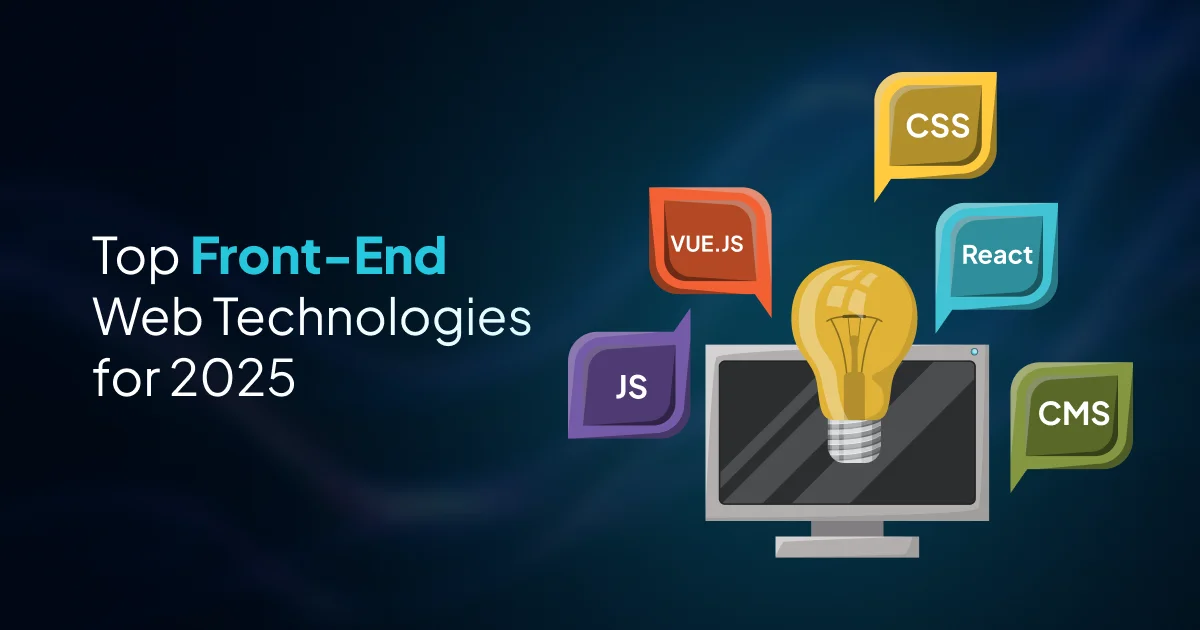
Originally developed by Facebook, React has maintained its position as the king of front-end libraries for years, and 2025 is no different. Its component-based architecture allows developers to build complex UIs from small, isolated pieces of code called components. This approach makes code reusable, manageable, and easier to debug.
We help businesses choose and build the right web technologies that scale, perform, and convert.
Contact Devtrios →Pros: High performance, huge ecosystem, strong community support, flexible, and scalable.
Cons: Can have a steep learning curve due to its unopinionated nature and reliance on third-party libraries for routing and state management.
Example Projects: Facebook, Instagram, Netflix, and the BBC News website all use React to deliver their highly interactive user interfaces.
Vue.js has carved out a significant niche by offering a more approachable alternative to React and Angular.
It’s often described as a progressive framework because you can adopt it incrementally. You can use it to power a single section of an existing page or to build a complex single-page application (SPA) from scratch.
Flexibility and Simplicity: Vue is known for its gentle learning curve. Its template syntax is familiar to anyone with HTML experience, and its documentation is considered some of the best in the industry.
Performance: Like React, Vue uses a Virtual DOM. It is lightweight and often delivers excellent performance, sometimes even outperforming React in specific benchmarks.
Growing Popularity: Vue’s popularity continues to rise, especially among small to medium-sized businesses and startups. Its balance of power and simplicity makes it an attractive choice for teams who need to move quickly. A growing number of UK digital agencies are adopting Vue for client projects.
Updates in 2025: Vue 3’s Composition API is now the standard, making it easier to organise and reuse logic in large applications. This feature brings Vue closer to React in terms of handling complex state, while retaining its signature developer-friendly experience.
Pros: Easy to learn, excellent documentation, great performance, flexible integration.
Cons: Smaller ecosystem compared to React, fewer large enterprise-level case studies.
Svelte takes a fundamentally different approach. While frameworks like React and Vue do their work in the user’s browser (the client-side), Svelte does its work during the build step (compile time). It compiles your components into highly efficient, vanilla JavaScript that directly manipulates the DOM.
No Virtual DOM: By shifting the work to the compiler, Svelte eliminates the need for a Virtual DOM. This means no framework overhead at runtime, resulting in incredibly fast applications and smaller bundle sizes.
Truly Reactive: Writing Svelte code feels natural. You declare variables, and when their values change, the UI updates automatically. There’s no need for complex hooks or boilerplate code.
Performance Benefits: Svelte applications often have the best performance metrics, including first contentful paint (FCP) and time to interactive (TTI). For projects where performance is the absolute top priority, Svelte is a compelling choice.
Pros: Exceptional performance, smaller bundle sizes, easy-to-write code, no runtime overhead.
Cons: Younger and smaller community, less mature ecosystem, fewer job opportunities compared to React.
Developed and maintained by Google, Angular is a full-fledged framework, not just a library. It provides a structured, opinionated environment for building large-scale, enterprise-level applications.
Enterprise-Level Applications: Angular’s rigid structure and comprehensive feature set make it ideal for large teams working on complex projects. It enforces consistency and best practices, which is crucial for long-term maintainability. Many financial institutions and large corporations in the UK rely on Angular for their internal and customer-facing platforms.
Scalability: The framework is built with scalability in mind. Its modular architecture and features like dependency injection make it easy to manage a growing codebase.
End-to-End Solution: Angular comes with everything you need out of the box: routing, state management, and a powerful command-line interface (CLI). This reduces the “decision fatigue” of choosing and configuring third-party libraries.
Pros: Complete and opinionated framework, excellent for large-scale projects, backed by Google, highly scalable.
Cons: Steep learning curve, can be verbose, performance can be an issue if not optimised correctly.
Styling is a critical part of front-end development. For years, Bootstrap was the go-to CSS framework, offering pre-built components like buttons, navbars, and modals. However, Tailwind CSS, a utility-first framework, has gained massive traction.
Bootstrap: A component-based framework. It’s great for rapid prototyping and for developers who don’t want to write a lot of custom CSS. You can quickly assemble a decent-looking interface.
Tailwind CSS: A utility-first framework. It provides low-level utility classes (e.g., flex, pt-4, text-center) that you compose directly in your HTML. This gives you complete control over the design without writing custom CSS files. It prevents the “style override” battles common with Bootstrap and promotes consistency.
In 2025, the trend is leaning heavily towards Tailwind CSS for custom designs, while Bootstrap remains a solid choice for internal tools and projects where speed is more important than a unique look.
TypeScript is a programming language developed by Microsoft that builds on JavaScript. It adds static types, which allow developers to catch errors during development rather than at runtime.
Error Prevention: By defining the types of data (e.g., string, number, boolean), TypeScript can flag potential errors in your code editor before you even run the application. This saves countless hours of debugging.
Improved Readability and Maintainability: Types make code self-documenting. When another developer (or your future self) looks at a function, they can immediately understand what kind of data it expects and what it returns.
Scalability: For large applications, TypeScript is non-negotiable. It provides the structure and safety needed to manage a complex codebase with a large team. All major front-end frameworks (React, Angular, Vue) have excellent support for TypeScript.
| Front-End Technology | Pros | Cons | Best For |
|---|---|---|---|
| React | High performance, huge ecosystem, flexible, great for SPAs. | Steep learning curve, requires other libraries for a full solution. | Scalable, interactive UIs and complex single-page applications. |
| Vue.js | Easy to learn, great documentation, fast, progressive adoption. | Smaller ecosystem than React, fewer large enterprise examples. | Startups, MVPs, and projects needing a fast turnaround. |
| Svelte | Blazing fast performance, small bundle sizes, simple syntax. | Young ecosystem, smaller community, fewer available jobs. | Performance-critical applications and static sites. |
| Angular | All-in-one framework, great for large teams, highly scalable. | Steep learning curve, verbose, can be rigid. | Enterprise-level applications with long-term maintenance needs. |
| Tailwind CSS | Highly customizable, no style overrides, promotes consistency. | Can lead to "class soup" in HTML, initial learning curve. | Custom designs where you need full control over the look and feel. |
| TypeScript | Catches errors early, improves code quality and maintainability. | Adds a compilation step, can slow down initial development slightly. | All medium to large-scale web development projects. |
The back-end is the engine of a web application. It handles business logic, database interactions, user authentication, and server configuration. The choice of back-end technology has a profound impact on an application’s performance, scalability, and security.
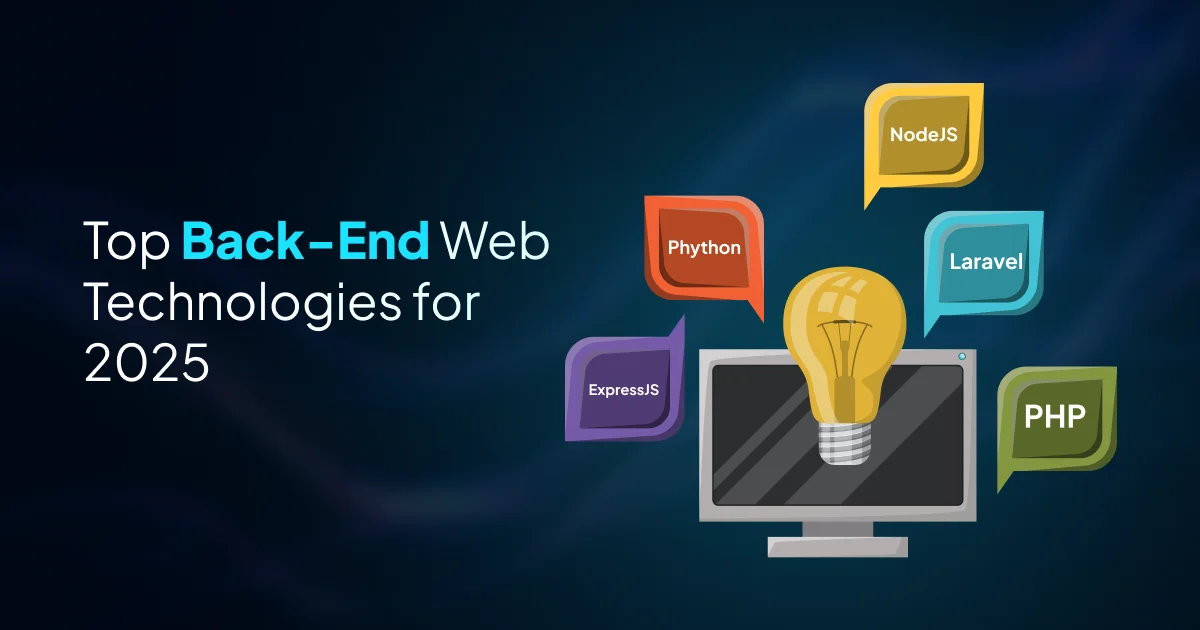
Node.js allows developers to run JavaScript on the server. Its non-blocking, event-driven architecture makes it incredibly efficient for handling many concurrent connections, which is ideal for real-time applications like chat apps and live streaming services.
Node.js: The established champion of server-side JavaScript. It has a massive package manager (NPM) with millions of libraries for every conceivable task. Frameworks like Express.js simplify the process of building robust APIs.
Deno: Created by the original author of Node.js, Deno aims to fix some of Node’s design flaws. It has security built-in by default (no file or network access unless explicitly permitted), a standard library, and native support for TypeScript. While Node.js still dominates, Deno is gaining traction for projects where security and modern tooling are paramount. Full-Stack Benefits: Using JavaScript on both the front-end and back-end (with Node.js) allows for a unified language across the entire tech stack. This can improve team collaboration and reduce the context-switching required for developers.
Python’s clean syntax and extensive libraries make it a favorite for web development, data science, and AI.
Django: A high-level, “batteries-included” framework. It follows the Model-View-Template (MVT) pattern and provides an admin panel, ORM (Object-Relational Mapper), and authentication system out of the box. It’s perfect for building complex, data-driven websites quickly and securely. Many UK government websites, like gov.uk, leverage Python and Django for their robust infrastructure.
FastAPI: A modern, high-performance web framework. As its name suggests, it’s designed for building APIs quickly. It uses Python’s type hints to provide automatic data validation, serialization, and interactive documentation (using OpenAPI and JSON Schema). Its performance is on par with Node.js and Go, making it an excellent choice for microservices and high-throughput APIs.
Ruby on Rails (RoR) popularised many web development concepts, including Convention over Configuration (CoC) and Don’t Repeat Yourself (DRY). It’s designed for developer happiness and productivity.
Why Rails is Still Relevant:
Speed of Development: Rails is unmatched for building and launching a Minimum Viable Product (MVP). Its conventions and code generators allow developers to build full-featured applications in a fraction of the time it would take with other frameworks.
Strong Community: The Rails community is mature, welcoming, and has produced a vast number of “gems” (libraries) that extend its functionality.
Ideal for Startups: For startups that need to iterate quickly and get a product to market, Rails remains a top choice. Shopify, one of the world’s largest e-commerce platforms, was built with Ruby on Rails.
PHP powers a staggering percentage of the web, thanks in large part to platforms like WordPress. While it once had a poor reputation, modern PHP is fast, capable, and a joy to work with, especially with frameworks like Laravel.
Laravel: An elegant and expressive PHP framework. It provides a beautiful syntax, a powerful ORM (Eloquent), and a rich ecosystem that includes tools for queuing, real-time events, and authentication. Laravel has made PHP development modern and enjoyable, and it’s a popular choice for building everything from simple websites to complex enterprise applications.
Java has been a cornerstone of enterprise software development for decades. Its platform independence (thanks to the Java Virtual Machine, or JVM), strong typing, and focus on stability make it a trusted choice for large-scale, mission-critical systems.
Frameworks like Spring: The Spring Framework is the de facto standard for building enterprise Java applications. It provides a comprehensive model for developing robust, secure, and scalable services. Many banking and financial service systems in the City of London are built on Java and Spring.
| Back-End Technology | Pros | Cons | Best For |
|---|---|---|---|
| Node.js | Fast and scalable for I/O-intensive tasks, huge ecosystem. | Not ideal for CPU-intensive computations. | Real-time applications, microservices, and APIs. |
| Python (Django/FastAPI) | Easy to learn, great libraries for AI/ML, rapid development. | Slower than compiled languages, GIL can be a bottleneck. | Data-driven websites, APIs, machine learning integrations. |
| Ruby on Rails | Extremely fast development, great for MVPs, strong conventions. | Slower runtime performance, can feel “too magical” for beginners. | Startups, CMS platforms, and e-commerce sites. |
| PHP (Laravel) | Huge community, easy to deploy, modern and elegant with Laravel. | Inconsistent language core, old legacy reputation. | General web development—from small sites to large applications. |
| Java (Spring) | Highly scalable, stable, secure, and platform independent. | Verbose, higher memory usage, slower development cycle. | Enterprise systems, banking, and large-scale e-commerce. |
Beyond the established frameworks, a wave of new technologies and architectural patterns is set to transform how we build for the web.
Artificial intelligence is no longer just a feature within applications; it’s becoming a partner in building them. AI tools are revolutionising the development workflow:
Code Generation: Tools like GitHub Copilot and Amazon CodeWhisperer suggest entire functions and code blocks in real-time, dramatically speeding up development.
Automated Debugging and Testing: AI can analyse code to identify potential bugs, suggest fixes, and even generate test cases to ensure code quality.
WebAssembly is a binary instruction format that allows code written in languages like C++, Rust, and Go to run in the browser at near-native speed. It’s not here to replace JavaScript, but to complement it.
Impact: Wasm enables performance-intensive applications like video editing software, 3D games, and scientific simulations to run directly in the browser, something previously impossible with JavaScript alone.
Instead of processing requests in a distant, centralised data centre, edge computing moves that work closer to the user.
Serverless: Developers write functions that are executed on demand, without managing the underlying server infrastructure.
Edge Functions: These serverless functions run on a global network of edge locations (like a CDN). This dramatically reduces latency, as the code executes geographically close to the user. This is crucial for delivering personalised content and ultra-fast APIs.
Just as microservices break down monolithic back-ends, micro-frontends break down monolithic front-ends. A web page can be composed of features owned by independent teams.
Impact: This allows large organisations to scale their development efforts. A team in London can work on the search feature while a team in Edinburgh works on the product recommendation engine, all for the same website, without stepping on each other’s toes.
PWAs combine the best of web and mobile apps. They are delivered through the web but offer an app-like experience, including offline access, push notifications, and the ability to be “installed” on a user’s home screen.
Why it Matters: For businesses, PWAs offer a way to engage users without the cost and friction of developing and distributing a native app through an app store.
These platforms allow users to build applications through graphical user interfaces and configuration instead of traditional programming. While not suitable for complex, bespoke systems, they are empowering non-developers to build internal tools, simple websites, and automate workflows, freeing up developers to focus on more complex challenges.
Web3 represents the next evolution of the internet, built on decentralised technologies like blockchain. While still in its early stages, we are seeing more web applications integrate Web3 features:
Examples: Logging in with a crypto wallet, interacting with smart contracts, or displaying ownership of NFTs (Non-Fungible Tokens).
| Emerging Trend | Impact on Web Development | Real-World Example |
|---|---|---|
| AI-Driven Development | Faster coding, automated debugging, improved code quality. | GitHub Copilot suggesting code snippets to developers. |
| WebAssembly (Wasm) | Enables near-native performance for web applications. | Figma using Wasm to run its C++ engine inside the browser. |
| Edge Computing | Lower latency, faster applications, improved user experience. | Personalizing website content via geo-based edge functions. |
| Micro-Frontends | Allows large teams to work independently on a single front-end. | An e-commerce site where checkout, search, and product pages are separate apps. |
| PWAs | App-like features such as offline access and push notifications. | The Twitter PWA allowing offline tweet browsing. |
| Blockchain & Web3 | Decentralized authentication, digital ownership, new business models. | Websites allowing users to log in using MetaMask crypto wallets. |
Choosing the right tech stack can feel overwhelming. Here’s how to approach it.

Project Requirements:
What are you building? A real-time chat app has different needs than a content-heavy marketing site. The complexity, scalability, and performance requirements should be your primary guide.
Team Expertise: The best tech stack is one your team knows well. Choosing a trendy but unfamiliar technology can lead to slow development and costly mistakes.
Time to Market: If you need to launch an MVP quickly, a framework like Ruby on Rails or Django can be a great choice. If you’re building a long-term enterprise platform, the robustness of Java or Angular might be a better fit.
Ecosystem and Community: A strong community means better documentation, more third-party libraries, and a larger talent pool to hire from. This is a significant advantage of popular technologies like React and Node.js.
Scalability and Performance: Consider how your application will grow. Will it need to handle millions of users?
Will it perform complex computations? Choose technologies that can scale with your ambitions.
Prioritise Security: With increasing cyber threats, security cannot be an afterthought. Use secure-by-default frameworks (like Deno or Django), regularly update dependencies, and follow best practices like the OWASP Top 10.
Focus on Performance: User expectations are high. A slow website will lose visitors. Optimise images, leverage browser caching, use a CDN, and choose performance-oriented technologies like Svelte or FastAPI where appropriate.
Embrace Automation: Automate your testing, deployment, and infrastructure using CI/CD pipelines. This reduces human error and frees up developers to focus on building features.
Adopt a Headless Approach: Decouple your front-end from your back-end (Headless CMS). This gives you the flexibility to use the best front-end technology for the job and makes it easier to deliver content to multiple platforms (web, mobile, IoT).
The web development landscape in 2025 is a dynamic and exciting place. Front-end frameworks like React and Svelte are pushing the boundaries of what’s possible in the browser. Back-end technologies like Node.js and FastAPI are enabling developers to build faster and more scalable APIs. And emerging trends like AI-driven development and WebAssembly are set to revolutionise the entire development process.
The key takeaway is that there is no single “best” technology. The right choice depends on your project’s specific needs, your team’s skills, and your business goals. By understanding the strengths and weaknesses of these modern web dev tools, you can make informed decisions that set your projects up for success. Ready to build a high-performance, future-proof web application? The technologies are here. It’s time to start building.
Ali Hamza is a professional content writer specializing in web development, modern web technologies, and SEO-focused long-form content. He writes in-depth, research-driven articles that simplify complex technical topics for businesses, developers, and decision-makers.
Ali focuses on creating user-first, search-intent-aligned content that reflects current industry best practices, emerging technologies, and real-world use cases for 2025 and beyond.
This content is reviewed and published by Devtrios, a technology company delivering scalable, high-performance web development solutions using modern front-end and back-end technologies. Devtrios works with startups and enterprises to build secure, SEO-friendly, and future-ready digital products.
This guide is based on industry research, practical insights, and analysis of modern web development trends shaping 2025. The goal is to provide accurate, unbiased, and actionable information to help businesses and developers choose the right web technologies for long-term growth, performance, and scalability.
We help businesses choose and build the right web technologies that scale, perform, and convert.
Contact Devtrios →Discover the 15 most costly digital marketing mistakes businesses make in 2026 from ignoring…
Thinking of hiring a digital marketing agency in 2026? Here are 10 data-backed reasons…
Discover the top enterprise mobile app development companies in 2026. Compare capabilities, costs, security…

Behind every great business is great technology. We partner with you to understand your goals, challenges, and vision then engineer AI, blockchain, and software solutions that are reliable, scalable, and built for real-world impact.
© 2026 Devtrios. All Rights Reserved.