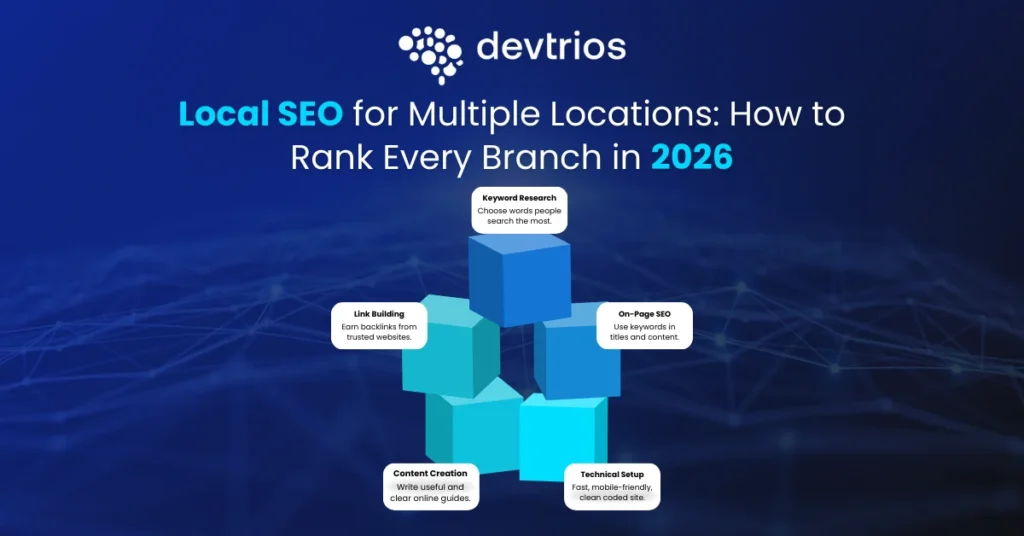

Local SEO for Multiple Locations: How to Rank Every Branch in 2026
Local SEO
Ali Hamza
Running a successful business across multiple locations presents a unique challenge in today’s search landscape. Local SEO for multiple locations is fundamentally different from single-location optimization because Google treats each location as a separate ranking entity, each competing independently in local search results. Whether you manage a franchise network, operate multiple retail branches, provide services across several cities, or represent a growing regional business, the stakes are high: failing to optimize each location means leaving revenue on the table.
The complexity lies not just in scale but in strategy. A dental clinic with five branches in different cities cannot simply replicate the same SEO tactics across locations. Google’s algorithms are designed to understand geographic relevance, local authority, and location-specific intent. What works for your New York office might actively harm your Los Angeles ranking if implemented incorrectly.
This guide is designed for business owners, marketing managers, agency professionals, and franchise operators who need a scalable, systematic approach to local SEO for multiple locations. By the end, you’ll understand how to structure your multi-location presence, avoid common pitfalls like keyword cannibalization, and implement strategies that align with 2026 SEO realities including AI-driven personalization and semantic optimization.
In this, you’ll learn:
- What multi-location SEO is and why it differs fundamentally from single-location strategy
- How Google’s algorithm ranks multiple locations
- An eight-step framework to optimize every location systematically
- Advanced 2026 tactics including AI personalization and programmatic SEO
- Common mistakes and how to fix them
- When to bring in professional support
What Is Multi-Location SEO?
Multi-location SEO (also called “SEO for multiple locations” or “multi-location local SEO”) refers to the practice of optimizing your online presence across multiple physical or service-area locations to rank higher in local search results. This applies to businesses with distinct geographic footprints: franchises, dental or medical practices with multiple offices, home services companies serving several cities, retail chains, or any business where customers interact with location-specific information.
Why It's Different From Single-Location SEO
Google treats locations as separate ranking entities. Each location has its own competitive landscape, local audience, and relevance signals. When someone searches “plumber near me” in Denver, Google displays different results than a search for “plumber near me” in Boston. This geographic segmentation means you can’t use a one-size-fits-all approach.
For a single-location business, ranking strategy is straightforward: build authority for your domain, optimize your Google Business Profile, accumulate local citations, and earn reviews. Multi-location SEO requires you to:
- Create distinct location pages that rank independently
- Manage separate (or location-specific) Google Business Profiles
- Distribute authority across multiple landing pages without cannibalizing rankings
- Maintain NAP (Name, Address, Phone) consistency across dozens or hundreds of citations
- Build local relevance signals for each location
How Google Ranks Multi-Location Businesses
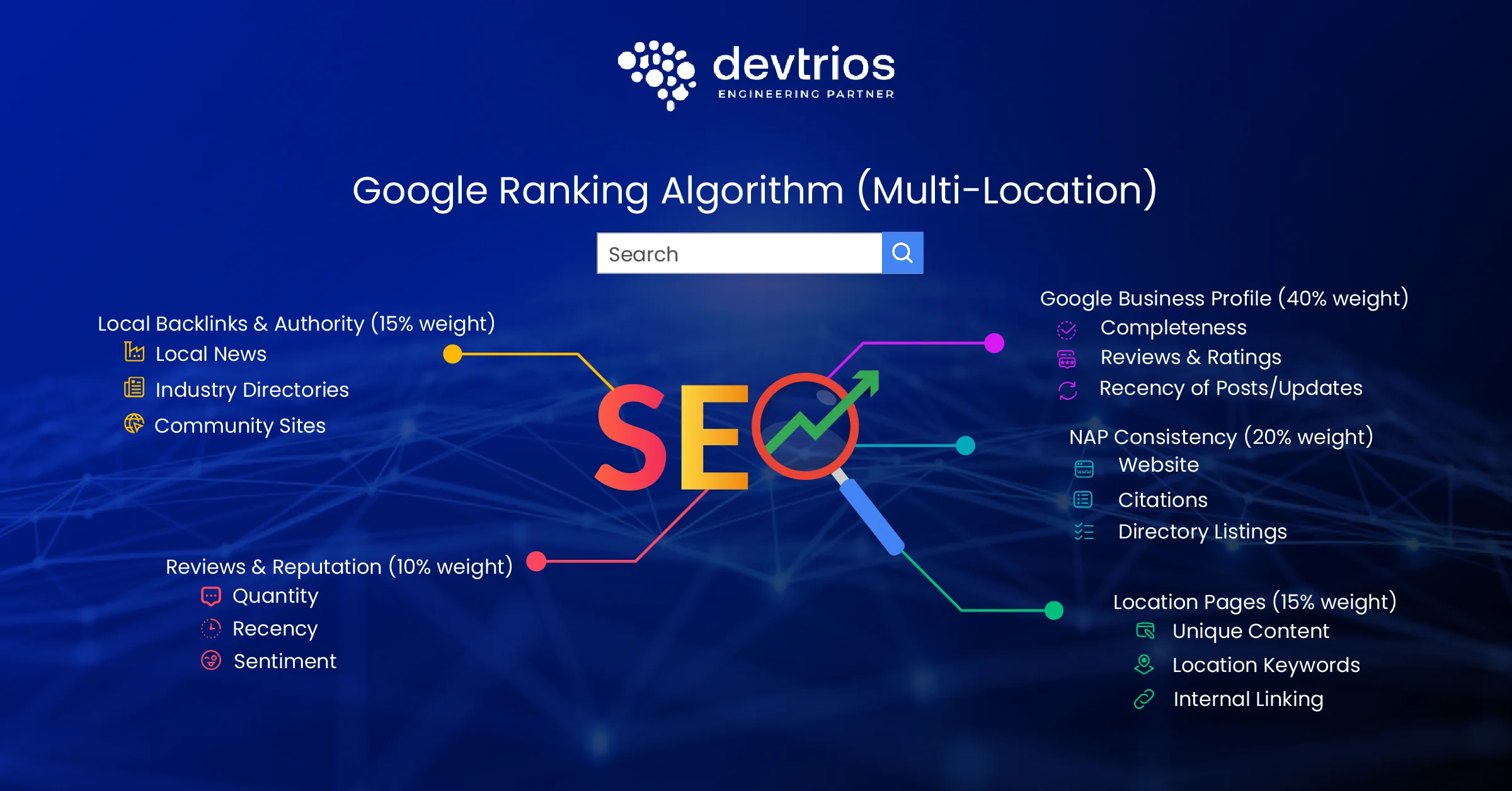
Understanding how businesses rank in multiple cities is essential before implementing strategy. Google considers multiple signals when determining whether your location-specific page deserves visibility in local search results.
Key Ranking Signals for Multi-Location Businesses
- Google Business Profile Signals
Your Google Business Profile (GBP) is the most important local ranking factor. Google prioritizes:
- Complete profile information (hours, phone, address, category)
- Recency of updates and posts
- Photo quality and consistency
- Response rate to customer questions
- Accurate category selection
- NAP Consistency
Name, Address, and Phone number consistency across your website, citations, and third-party directories signals legitimacy to Google’s algorithm. Inconsistencies (e.g., “ABC Dental” vs. “ABC Dental Services”) can fragment your local authority and confuse the algorithm. - Proximity and Relevance
Google weighs distance between the searcher and your location. A search for “restaurant near me” prioritizes nearby results. However, relevance (topic authority) can override pure distance a highly-rated, well-optimized location may rank above a geographically closer competitor. - Location Landing Pages
Dedicated, unique pages for each location signal to Google that you’re serious about serving that market. These pages should contain location-specific content, not templated boilerplate. - Reviews and Ratings
More reviews, higher ratings, and recent review activity boost local rankings. Google also considers review sentiment and responsiveness. - Local Backlinks and Citations
Links from local news outlets, chambers of commerce, industry directories, and community websites reinforce geographic relevance. - On-Page SEO Signals
Title tags, meta descriptions, headers, and schema markup that include location-specific keywords help Google understand your content’s geographic relevance.
The Multi-Location Ranking Framework
Based on its analysis, the system decides the next action. Machine learning models predict likely outcomes based on similar past cases. Rule-based logic handles decisions with clear right/wrong answers. The system considers options and selects the best path forward.
In invoice processing: The AI decides whether to auto-approve (saves time), route for human approval (prevents errors), or flag for investigation (catches fraud or unusual activity). These decisions reflect patterns learned from thousands of prior invoices, not programmed rules.
Step-by-Step Local SEO Strategy for Multiple Locations
The core strategy for ranking in multiple cities involves a systematic eight-step framework that works whether you have 2 locations or 200. This approach ensures each location receives dedicated optimization without cannibalizing others.
Step 1: Create Dedicated Location Pages
Dedicated location pages are the foundation of multi-location SEO. Each page should serve as a unique, authoritative resource for that specific location.
URL Structure
Use a consistent, logical structure:
- example.com/locations/new-york/
- example.com/locations/san-francisco/
- example.com/los-angeles/ (for service areas)
Avoid vague structures like example.com/new-york that might compete with your homepage or create indexing confusion.
Unique Content Requirements
Each location page must contain:
- Unique headline (e.g., “Dental Services in New York – Expert Care in Manhattan”)
- Local introduction (150–200 words explaining why this location matters, local team details)
- Location-specific services or offerings (not just copied from the homepage)
- Team member profiles (if different staff at each location)
- Local testimonials and case studies
- Location-specific FAQs
- Local event participation or sponsorships
- Location address, hours, and parking/access details
Avoid Duplication
Each page should be at least 60–70% unique. Google’s algorithms detect thin, templated content and may penalize or de-index redundant pages. Use a template structure, but fill in genuine, location-specific details.
Internal Linking Strategy
Link from your homepage to all location pages. Link from location pages to relevant service pages. Create a logical hierarchy:
- Homepage → Service Page → Location Page
Example: Home → “Dental Implants” → “Dental Implants in New York”
This internal linking structure helps Google understand your site’s organization and distributes authority effectively.
Step 2: Optimize Google Business Profile for Each Location
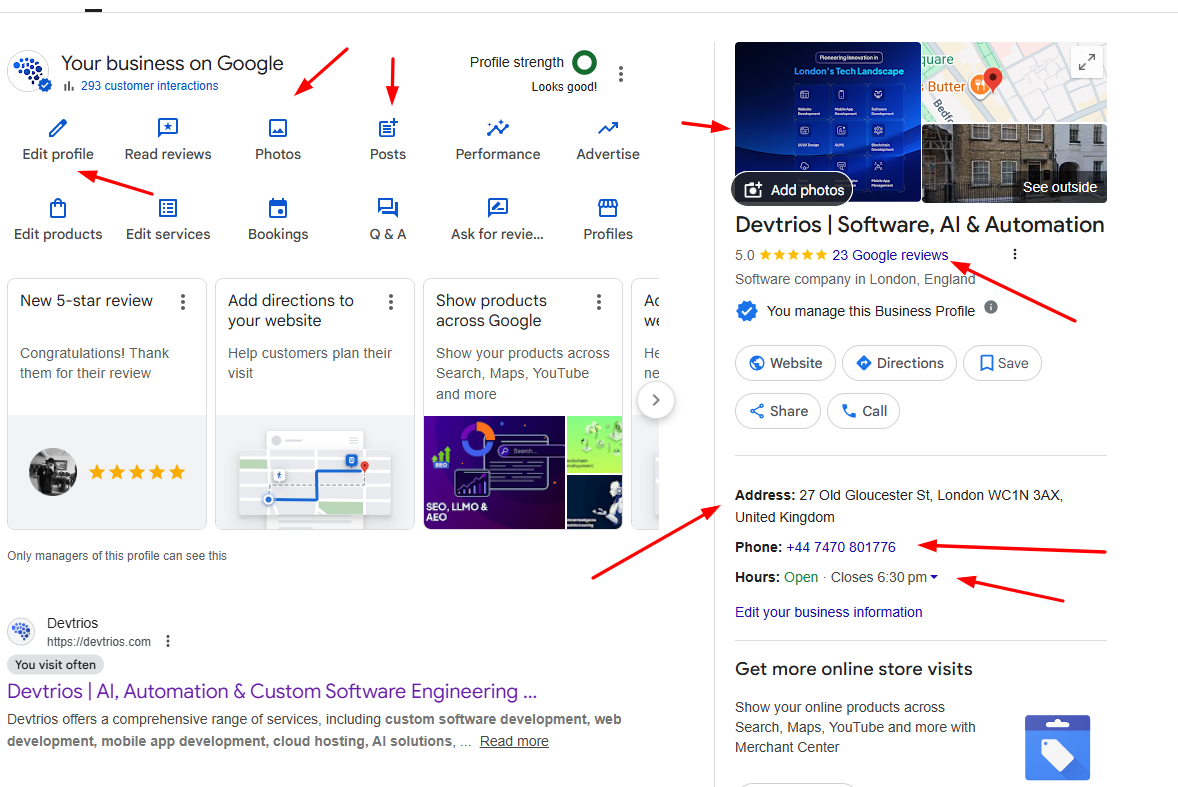
Your GBP is your most powerful tool. If you have multiple locations, you must create separate GBP profiles for each.
Setting Up Multiple GBP Profiles
- Use Google My Business (GMB) or the Google Business Profile interface
- Create a unique profile for each physical location
- Use exact address information (no office numbers or “suite” variations)
- Select the most relevant primary category (e.g., “Dentist” not “Healthcare”)
- Add 5–10 secondary categories for specificity
Phone Numbers
Each location should have a local phone number, not a centralized call center. This signals genuine local presence and improves answer rates for location-specific inquiries.
Categories and Attributes
- Choose primary category carefully (impacts who sees your business)
- Use all available attributes (wheelchair accessible, online booking, delivery, etc.)
- Match categories to what customers search for locally
Photos and Videos
Upload 20+ high-quality photos per location:
- Exterior storefront
- Interior spaces
- Team members
- Customer testimonials (photos)
- Service in action
Recent photos (updated monthly) signal active business presence.
Posts and Updates
Post 2–3 times per week:
- New services or promotions
- Local news or events
- Team spotlights
- Customer success stories
- Seasonal updates
Recency signals engagement and activity, which boosts local ranking.
Review Management
Encourage customers to review. Respond to all reviews (positive and negative) within 24 hours. This signals responsiveness and builds customer trust.
Step 3: Local Keyword Mapping (Avoid Keyword Cannibalization)
Keyword cannibalization is one of the most common and costly mistakes in multi-location SEO. This occurs when multiple pages compete for the same keyword, diluting your ranking power. Understanding how to avoid keyword cannibalization in location pages is critical for success.
The Problem
Imagine you have two location pages:
- example.com/locations/denver/
- example.com/locations/boulder/
Both pages rank for “dentist near me.” Google must decide which page is more relevant. This internal competition weakens both rankings. The solution: assign each location unique primary keywords.
Keyword Mapping Framework
| Location | Primary Keyword | Secondary Keywords | Landing Page |
|---|---|---|---|
| Denver | Dentist in Denver | Denver dental office, family dentist Denver | /locations/denver/ |
| Boulder | Dentist in Boulder | Boulder dental clinic, pediatric dentist Boulder | /locations/boulder/ |
| Fort Collins | Dentist in Fort Collins | Fort Collins cosmetic dentistry, teeth cleaning Fort Collins | /locations/fort-collins/ |
| Colorado Springs | Dentist in Colorado Springs | Colorado Springs emergency dental, sedation dentistry Springs | /locations/colorado-springs/ |
Best Practices
- Assign one primary keyword per location page
- Use location + service (e.g., “SEO services in Toronto”)
- Use exact match modifiers (City + Service) in title tags
- Avoid overlap—no two pages should target the same keyword
- Use secondary keywords to add depth without cannibalization
Tools for Keyword Mapping
- Google Search Console (see which queries each page ranks for)
- SEMrush or Ahrefs (competitive keyword analysis)
- Moz Local (citation and local keyword tracking)
Step 4: On-Page SEO Optimization
On-page optimization ensures your location pages are technically and content-wise optimized for both Google and users.
Title Tags
Keep it simple and location-specific:
- ✅ “Dental Services in New York | Expert Implants & Cosmetic Care”
- ❌ “Dental Services in New York | Dental Services in New York | Dentist”
Include: Location + Service + Unique Value Proposition
Meta Descriptions
Under 160 characters, include the location and a call-to-action:
- “Award-winning dental practice in New York offering implants, cosmetic dentistry, and emergency care. Schedule your consultation today.”
Headers (H1, H2, H3)
- H1: One per page, includes location and primary keyword
- H2s: Break content into logical sections (Services, Our Team, Why Choose Us, etc.)
- H3s: Support H2s with additional detail
Schema Markup
Implement structured data to help Google understand your content:
					json
{
  "@context": "https://schema.org",
  "@type": "LocalBusiness",
  "name": "Your Dental Practice",
  "address": {
    "@type": "PostalAddress",
    "streetAddress": "123 Main Street",
    "addressLocality": "New York",
    "addressRegion": "NY",
    "postalCode": "10001",
    "addressCountry": "US"
  },
  "telephone": "+1-212-555-0100",
  "url": "https://example.com/locations/new-york/",
  "image": "https://example.com/images/ny-office.jpg",
  "geo": {
    "@type": "GeoCoordinates",
    "latitude": "40.7128",
    "longitude": "-74.0060"
  },
  "priceRange": "$$",
  "aggregateRating": {
    "@type": "AggregateRating",
    "ratingValue": "4.8",
    "ratingCount": "147"
  }
}
Image Optimization
- Use descriptive filenames: denver-dental-office-interior.jpg (not image-234.jpg)
- Add alt text: “Interior of our Denver dental practice in Cherry Creek”
- Compress images to reduce page load time
- Use WebP format for faster loading
Step 5: Citations and Local Listings
Citations are mentions of your business (Name, Address, Phone) on external websites. Consistency across citations signals legitimacy.
Major Citation Platforms
Build citations on these high-authority, location-relevant directories:
Citation Platforms and Priority
| Platform | Priority | Notes |
|---|---|---|
| Google Business Profile | Critical | Non-negotiable |
| Apple Maps | Critical | Essential for iOS users |
| Yelp | High | Significant for local discovery |
| Better Business Bureau (BBB) | High | Trust and credibility |
| Industry-specific directories | High | Varies by industry (e.g., Healthgrades for medical) |
| Local chambers of commerce | Medium | Community relevance |
| YellowPages, DexKnows | Medium | Legacy but still indexed |
| Facebook Business | Medium | Social proof and engagement |
Citation Consistency Best Practices
- Standardize your NAP across all platforms
- Use the exact same business name spelling
- Use the same phone number format (+1-212-555-0100 or 212-555-0100, but be consistent)
- Use complete, exact addresses
- Claim existing listings rather than creating duplicates
- Audit quarterly for inconsistencies
- Use citation management tools (Moz Local, Yext) to streamline consistency across multiple locations
Step 6: Local Link Building Strategy
Local backlinks links from relevant, geographically-connected websites boost your location’s authority. This is harder to scale but highly impactful.
Local Link Building Tactics
Local News and Press Coverage
- Pitch local news outlets on community stories
- Sponsor local events and ask for mentions
- Share press releases with local journalists
- Partner with local nonprofits and share the story
Chamber of Commerce and Business Organizations
- Join local chambers
- Get listed in business directories
- Participate in local business associations
- Guest post on chamber blogs
Local Sponsorships and Partnerships
- Sponsor local sports teams, schools, or events
- Partner with complementary local businesses
- Host local webinars or workshops
- Co-market with local influencers
Guest Posting on Local Blogs
- Identify local bloggers and publications
- Write valuable, location-relevant content
- Include a link back to your location page
- Focus on thought leadership, not direct promotion
Local Resource Pages
- Get listed on “Best [Service] in [City]” pages
- Contribute to city guides and resource collections
- Create a “local partnerships” section on your site to encourage reciprocal links
Industry and Professional Directories
- Attorney directories (if legal services)
- Medical directories (Healthgrades, Zocdoc)
- Real estate directories (MLS, local brokerages)
- Service industry directories (handyman, plumbing, HVAC)
Step 7: Reviews and Reputation Scaling
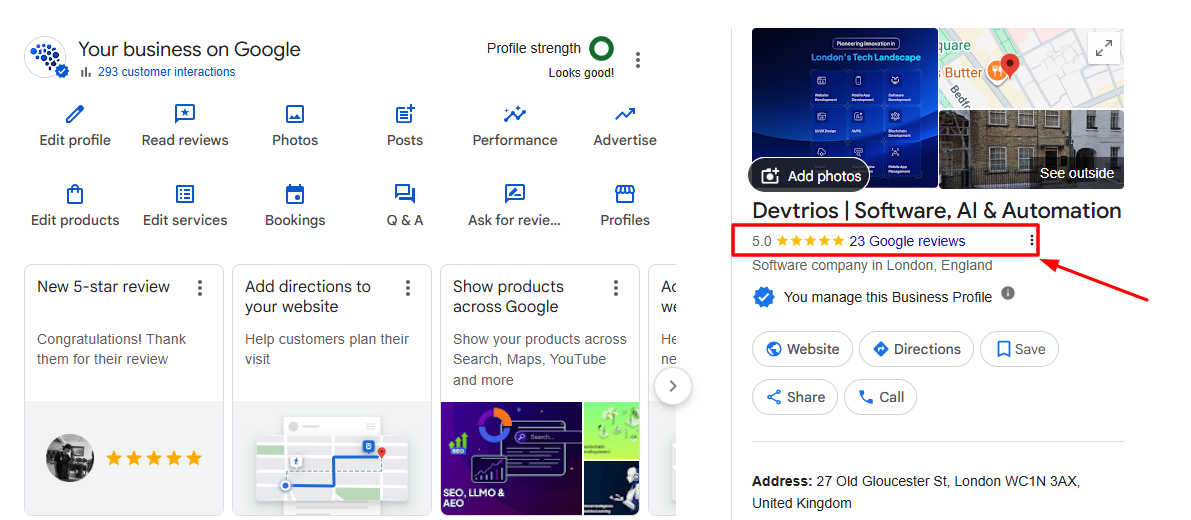
Reviews are both a ranking signal and a conversion factor. Scaling reviews across multiple locations requires systematic, ethical practices.
Automated Review Request Systems
- Email automation
- Send review requests 24–48 hours after purchase/service
- Include direct links to review platforms
- Make it simple and frictionless
- SMS review flows
- Text customers a link to leave a review
- Higher response rates than email
- Compliant with TCPA (with opt-in consent)
- QR codes
- Place QR codes in physical locations (receipt, thank you card, signage)
- Customers scan and leave review directly
- No typing required higher completion rates
Review Management Best Practices
- Respond to all reviews within 24–48 hours
- Thank positive reviewers; address negative feedback professionally
- Never incentivize positive reviews (against Google/platform policies)
- Train all staff on the importance of customer satisfaction (reviews flow naturally)
- Use review insights to identify service gaps and improve operations
Multi-Location Review Strategy
- Set location-specific review goals (e.g., 50 reviews per location per quarter)
- Monitor reviews by location to spot local trends
- Celebrate milestones publicly (e.g., “Thank you for 500 reviews!”)
Step 8: Tracking and Reporting

Without measurement, you can’t optimize. Implement a robust tracking system to monitor performance across locations.
Google Search Console
- Verify all location pages
- Monitor search performance by location
- Identify which queries each page ranks for
- Spot technical issues (indexing, mobile usability, etc.)
Google Business Profile Insights
- Track impressions, clicks, and actions by location
- Monitor review volume and ratings
- Analyze customer questions
- Review direction request trends
Local Rank Tracking Tools
- SEMrush, Ahrefs, or Moz for keyword rankings
- Local-specific tools like Whitespark or Bright Local
- Track rankings for location-specific keywords monthly
- Compare against competitors
Conversion Tracking
- Implement Google Analytics 4 on all location pages
- Track phone calls (use call tracking numbers like CallRail)
- Monitor form submissions and signups by location
- Set up conversion goals (booking appointments, directions clicks)
Monthly Dashboard
Create a simple report tracking:
- Rankings for primary keywords (by location)
- GBP impressions and actions
- Review volume and average rating
- Organic traffic to location pages
- Conversions (calls, bookings, etc.)
Advanced Multi-Location SEO Tactics (2026)
Modern SEO in 2026 extends beyond traditional on-page and citation tactics. AI personalization, dynamic content, and semantic optimization open new opportunities for multi-location businesses.
AI-Driven Content Personalization
Search engines increasingly personalize results based on user context: location, search history, device, time of day. You can optimize for this:
- Geofencing and location services: Serve different content based on the user’s current location
- Time-based personalization: Highlight “open now” or relevant hours
- Device-specific optimization: Ensure mobile experiences are location-aware
- Seasonal variations: Customize content for seasonal services or local events
Dynamic Schema Automation
Instead of manually creating schema for each location, use dynamic schema generation:
- Populate schema fields from your location database
- Auto-generate local business schema for each location page
- Update schema in real-time as information changes
- Use JSON-LD for easier automation and maintenance
Programmatic SEO
Programmatic SEO involves systematically generating pages based on data. For multi-location businesses:
- Create location + service combination pages (e.g., “Plumbing Services in Denver,” “Emergency Plumbing in Denver”)
- Generate service-specific location pages automatically
- Maintain unique, AI-generated content for each combination
- Scale across hundreds or thousands of pages
Example: A plumbing company with 50 locations and 10 services could generate 500 highly-targeted pages automatically.
Entity Optimization
Google’s Knowledge Graph connects entities (people, places, things). Optimize for entity-based search:
- Ensure your business is correctly represented in Knowledge Graph
- Link location pages to relevant entities (neighborhoods, landmarks, local institutions)
- Use entity-rich language and references throughout content
- Create content around local entities relevant to your business
AI Overview Optimization
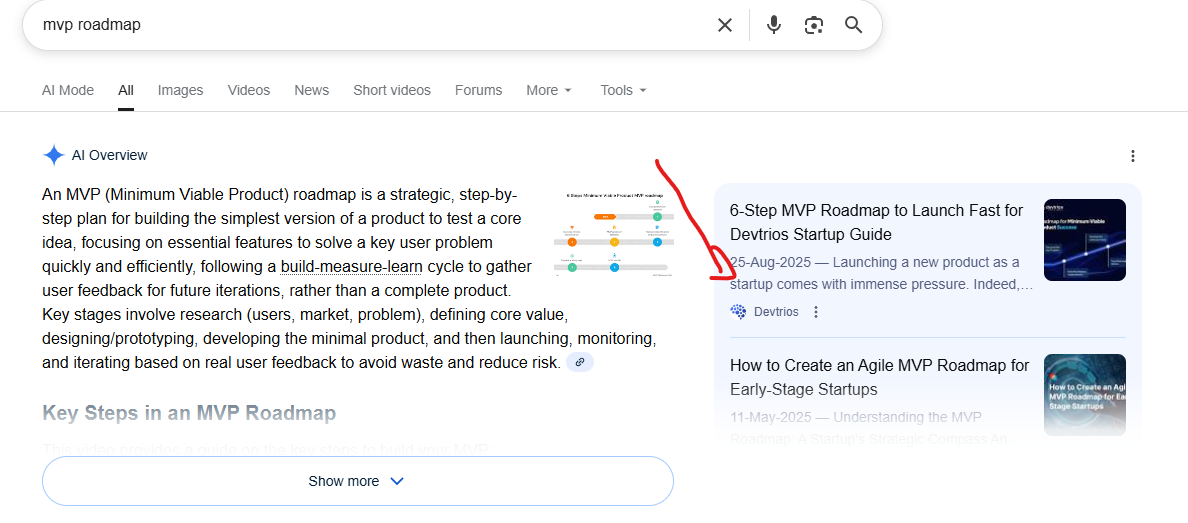
Google’s AI Overviews (in Search Generative Experience) summarize information from multiple sources. Optimize for visibility:
- Answer common questions clearly and concisely in FAQ sections
- Use structured data (FAQ schema) to appear in AI summaries
- Write in clear, accessible language
- Provide specific, actionable information rather than fluff
Common Mistakes in Multi-Location SEO (and How to Fix Them)
Learning from common pitfalls accelerates your success.
Mistake 1: Duplicate Content Across Location Pages
Problem: Using the same template text for all locations signals low quality to Google.
Fix: Spend time writing unique, location-specific introductions and content for each page. Use templates for structure, but customize content.
Mistake 2: Shared Phone Numbers
Problem: Using a centralized phone number for all locations dilutes local relevance signals.
Fix: Obtain local phone numbers for each location. If cost is a concern, use VOIP services like Google Voice or specialized multi-location phone systems that forward calls appropriately.
Mistake 3: Weak or Thin Content on Location Pages
Problem: Location pages with under 300 words are often treated as thin content by Google’s algorithm.
Fix: Aim for 800–1,500 words minimum per location page. Include unique service information, team bios, local testimonials, and FAQs.
Mistake 4: Poor Internal Linking
Problem: Location pages that aren’t internally linked from service pages cannibalize each other’s authority.
Fix: Create a deliberate internal linking strategy. Link from service pages to all relevant location pages. Link from location pages back to service pages.
Mistake 5: Keyword Cannibalization
Problem: Multiple location pages targeting the same keyword (e.g., both Denver and Boulder pages targeting “dentist near me”).
Fix: Use the keyword mapping framework from Step 3. Assign unique primary keywords per location. Monitor Search Console for cannibalization signals.
Mistake 6: Inconsistent NAP Data
Problem: Variations in business name, address, or phone across citations confuse Google’s algorithm.
Fix: Audit all citations quarterly. Use citation management tools to standardize NAP data across platforms.
Mistake 7: Creating Fake or Unverified Locations
Problem: Creating GBP profiles for locations where you don’t physically operate violates Google’s guidelines and can result in profile suspension or brand penalties.
Fix: Only create profiles for legitimate, physical locations. For service areas, use service area targeting in GBP rather than fake location addresses.
Mistake 8: Ignoring Review Management
Problem: Low review volume or poor review sentiment significantly impacts local rankings.
Fix: Implement systematic review request processes. Train staff on customer satisfaction. Respond professionally to all reviews.
Multi-Location SEO Checklist (Free Download)
Use this checklist to ensure you’ve covered all critical elements:
Download the Free Multi-Location SEO Checklist (2026)
Make sure every location is fully optimized for local rankings. This actionable PDF checklist covers Google Business Profile setup, keyword mapping, citation consistency, on-page optimization, reviews, link building, and tracking — everything you need to scale rankings across multiple cities in 2026.
📥 Download Free SEO Checklist (PDF)When Should You Hire Multi-Location SEO Support?
Multi-location SEO is manageable for a 2–3 location business with an in-house team. However, as you scale, complexity grows exponentially. Here’s how to assess whether professional support makes sense.
Factors Suggesting Professional Support May Be Beneficial
Scale and Complexity
If you’re managing 10+ locations, the operational overhead of maintaining consistency across citations, content, and reporting becomes significant. Professional support can systematize this at scale.
Time Constraints
Multi-location SEO is not a one-time project; it requires ongoing optimization, monitoring, and adaptation. If your team doesn’t have 15–20 hours per week available, outsourcing frees up internal resources for core business activities.
Competitive Pressure
If competitors are outranking you across multiple locations, a specialized team can conduct competitive analysis and implement strategies faster than an in-house team learning on the job.
ROI and Risk Mitigation
A single cannibalization mistake or citation inconsistency can cost thousands in lost leads monthly. Experienced teams bring institutional knowledge and prevent costly errors.
Technical Expertise
If you lack in-house expertise in schema markup, site architecture for multi-location sites, or programmatic SEO, professional support brings specialized skills that accelerate results.
What to Look For When Evaluating Support
- Proven multi-location case studies in your industry
- Transparent reporting with location-level metrics
- Clear citation management processes (how do they ensure NAP consistency?)
- Advanced technical SEO expertise (schema, site structure, programmatic SEO)
- Review management and reputation services
- Local link building capabilities (not just directory submissions)
- Scalable processes (can they handle growth?)
Conclusion
Multi-location SEO is complex, but it’s systematic and achievable with a clear strategy and this is exactly how Devtrios helps businesses scale predictable local growth. The businesses that dominate local search across multiple locations share common characteristics: they’ve systematically optimized their Google Business Profiles, created unique location pages, managed citations rigorously, and built local authority through reviews and local links. At Devtrios, we’ve seen firsthand how avoiding cannibalization, maintaining NAP consistency, and tracking results religiously leads to compounding visibility gains.
The opportunity is significant. While most businesses struggle with SEO for multiple cities and location-based SEO, brands that partner with Devtrios and execute systematically capture a disproportionate share of local search traffic and qualified leads.
Start with the eight-step framework outlined in this guide by Devtrios: location pages, GBP optimization, keyword mapping, on-page SEO, citations, local links, reviews, and tracking.
As you scale beyond 10–15 locations, consider exploring professional multi-location SEO support from Devtrios. The investment typically pays for itself many times over through improved rankings, increased local visibility, and higher conversion rates across your entire location network.
Your next step: Audit your current multi-location presence using the Devtrios checklist. Identify your biggest gaps, prioritize fixes, and begin implementation. Consistency over time beats perfection today a principle we follow at Devtrios for every campaign.
Ready to Rank Every Location in Local Search?
If you're managing multiple business locations, your growth depends on how well each branch ranks locally. Our multi-location SEO specialists help you eliminate keyword cannibalization, optimize Google Business Profiles, build consistent citations, and scale rankings across every city aligned with 2026 search algorithms and AI-driven search behavior.
Get a Free Multi-Location SEO Audit →Frequently Asked Questions (FAQs)
Multi-location SEO is optimizing your online presence across multiple physical locations to rank higher in local search. It involves creating unique location pages, managing separate Google Business Profiles, maintaining NAP consistency, and building local authority for each location independently.
Create a location page for every distinct physical location where customers interact with your business. For a franchise with 50 locations, create 50 pages. For service-area businesses without physical offices, use service area targeting in GBP rather than fake location pages.
Use subdomain or subfolder structure (e.g., denver.example.com or example.com/denver/) rather than separate domains. This consolidates domain authority while keeping locations distinct. Separate domains dilute authority.
Expect 3–6 months for initial ranking improvements, 6–12 months for significant visibility gains. Local SEO moves faster than national SEO. Review velocity and citation consistency impact timelines.
Use a template for structure, but write unique introductions, local details, and testimonials for each location. Aim for 60–70% unique content per page. Use tools like Copyscape to audit similarity.
Yes, if they serve genuinely different geographic areas. A dental practice with two Denver offices (north side and south side) could rank both for "dentist in Denver" if properly optimized. Avoid artificially splitting one market.
To optimize geographic performance metrics for multi-location businesses, start by tracking performance location by location instead of relying on aggregated data. Set up separate Google Business Profiles, location-based landing pages, and localized tracking in Google Analytics and Google Search Console.
Focus on:
Local keyword rankings for each city or service area
Google Business Profile insights (calls, directions, profile views)
Location-specific conversion rates (forms, calls, store visits)
Local reviews and ratings consistency
Standardize NAP (Name, Address, Phone) across directories, use localized content, and monitor underperforming locations separately to apply targeted SEO, ads, or content improvements. Regularly compare top- and low-performing regions to identify scalable wins and fix local gaps.
About the Author
This article is written by Ali Hamza, a digital strategist and technology writer with hands-on experience in product development, emerging technologies, SEO, and scalable digital systems. He focuses on translating complex technical topics into clear, practical guidance that helps readers make informed decisions.
Ali regularly researches consumer technology trends, software platforms, and digital optimization strategies, ensuring content accuracy, usability, and real-world relevance across a wide range of topics.
View Author Profile →