
Mobile App Project Management: From Discovery to Post-Launch Success
Project Management
Ali Hamza
Building a successful mobile app requires more than just a great idea and talented developers. Many promising app projects stumble or fail completely due to avoidable pitfalls like unclear goals, budget overruns, and poor planning. In fact, studies show a significant percentage of IT projects, including mobile apps, fail to meet their original objectives. This is where structured project management becomes essential. It provides the framework to navigate complexities, manage resources, and align teams toward a common goal.
This guide provides a comprehensive overview of mobile app development project management, from the initial discovery phase to post-launch optimization. You will learn the critical processes that separate successful apps from those that fall short, ensuring your project delivers value on time and within budget.
Ineffective Communication and Misalignment
Poor communication between stakeholders, project managers, and development teams creates confusion and delays. When everyone has a different understanding of the project’s goals, priorities, and status, mistakes are inevitable. A significant number of project failures are attributed directly to breakdowns in communication, leading to rework and missed deadlines.
Budget and Resource Mismanagement
Setting an unrealistic budget or failing to track expenses accurately is a direct path to project failure. This includes underestimating the cost of development, quality assurance, and post-launch support. Without proper financial planning and oversight, teams may be forced to cut corners on critical features or halt development entirely.
Weak Post-Launch Planning
Treating an app launch as the finish line is a critical mistake. A successful mobile application requires ongoing support, marketing, and iteration based on user feedback and performance analytics. Without a plan for post-launch optimization and maintenance, even a well-built app will struggle to retain users and achieve long-term success.
Discovery & Validation: The Foundation of App Success
The discovery phase is a structured process of research and analysis conducted before any development begins. It is designed to validate the core app idea, define its strategic direction, and minimize project risk. This initial stage ensures that the app you intend to build is not only technically feasible but also commercially viable and genuinely desired by its target audience.
Skipping discovery is one of the most common reasons app projects fail. Building a product based on assumptions instead of data often leads to creating an app with no market fit. It’s far less costly to find out an idea is flawed on paper than after investing thousands of dollars and months of development time. Proper validation sets the foundation for all future decisions.
For teams that lack internal product or delivery expertise, working with an experienced mobile partner during discovery can make a significant difference. At Devtrios, for example, discovery typically includes structured stakeholder workshops, user research, technical feasibility assessment, and a clear product roadmap before a single line of code is written. This disciplined approach helps founders avoid costly assumptions and enter development with confidence.
Key Methods for Discovery and Validation
A thorough discovery process utilizes several methods to gather qualitative and quantitative insights.
Market Research
This involves analyzing the competitive landscape to understand existing solutions and identify gaps in the market. It answers critical questions: Who are the main competitors? What are their strengths and weaknesses? How can your app offer a unique value proposition?
User Interviews
Directly engaging with potential users provides invaluable insights into their needs, pain points, and behaviors. These conversations help refine the problem your app aims to solve and ensure you are building features that real people will use and appreciate.
MVP and Prototype Testing
An MVP (Minimum Viable Product) is a basic, functional version of your app with just enough features to be usable by early customers. A prototype is often a non-functional, clickable model. Testing either with users allows you to gather real-world feedback on the concept and user experience, enabling quick, low-cost iterations before committing to full-scale development.
Planning a Mobile App? Get It Right from Day One
We help you run structured discovery, define clear scope, choose the right tech stack, and build a delivery plan that reduces risk, controls costs, and sets you up for strong post-launch growth.
Get Your App Strategy Now →Planning & Scope Definition: Building Your Project Blueprint
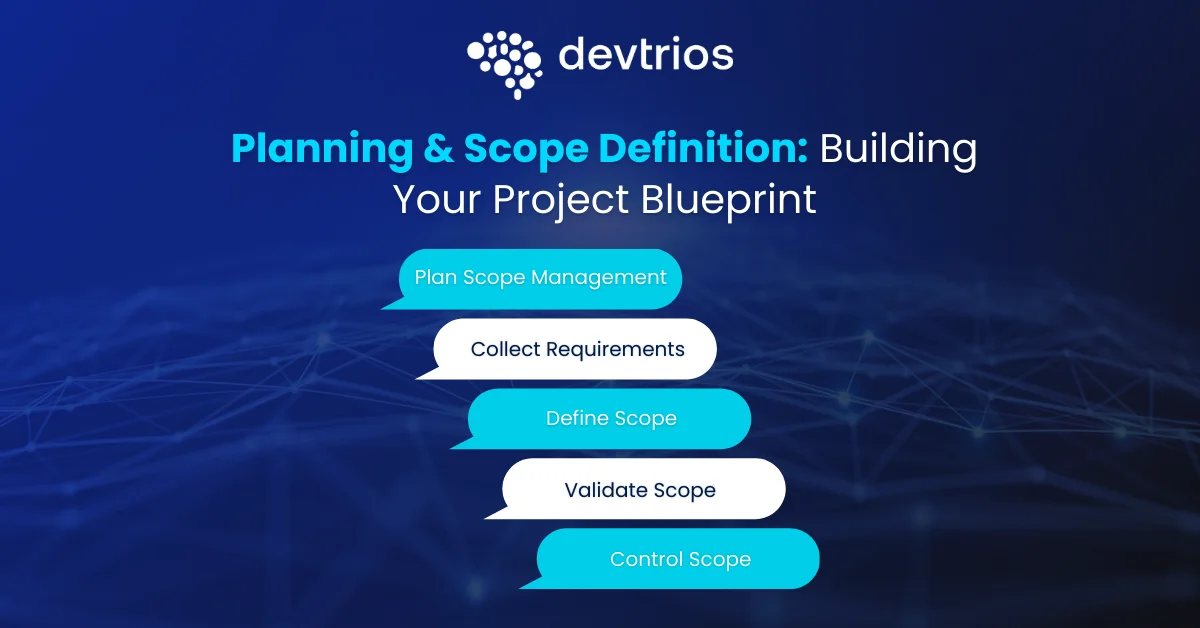
With a validated idea, the next step is to translate your vision into an actionable plan. This planning and scope definition phase is where you create the blueprint for the entire project. It formalizes objectives, sets boundaries, and aligns all stakeholders before development work begins. Strong documentation is the key to preventing misunderstandings and keeping the project on track.
Creating the Project Charter
A project charter is the foundational document that officially authorizes the project. It acts as a single source of truth, outlining the project’s vision, objectives, scope, and key stakeholders. This document ensures everyone involved has a shared understanding of what success looks like from the outset. It typically includes the business case, high-level goals, and major deliverables.
Defining Success Metrics (KPIs)
You cannot manage what you do not measure. Establishing clear Key Performance Indicators (KPIs) is critical for gauging the project’s success both during development and after launch. These metrics should be specific, measurable, and tied directly to business goals. Examples include user engagement rates, retention figures, conversion rates, or specific performance benchmarks.
Establishing a Realistic Timeline
A common mistake is creating an overly optimistic timeline that doesn’t account for potential delays, testing, or feedback loops. A realistic project timeline breaks down the work into phases, estimates the effort for each task, and includes buffers for unexpected challenges. This transparency helps manage stakeholder expectations and ensures the team can deliver quality work without being rushed.
Implementing a Change-Control Process
Scope creep is a major threat to any project, but change itself is not the enemy. New information or opportunities will arise. A formal change-control process establishes a structured way to handle new requests. It requires stakeholders to submit a change request, which is then evaluated for its impact on the project’s budget, timeline, and resources. This process allows for flexibility while preventing uncontrolled changes from derailing the project.
Choosing the Right Technology Stack
Selecting the right technology stack is a critical decision in mobile app project management that directly influences performance, cost, and future scalability. This choice determines the programming languages, frameworks, and tools your development team will use. Making an informed decision requires balancing business goals with technical requirements.
In practice, this decision benefits from an experienced engineering partner who has delivered across multiple stacks and industries. Devtrios regularly evaluates factors such as performance requirements, future scalability, team capacity, and integration complexity before recommending native or cross-platform development, ensuring the choice aligns with both technical and business objectives.
A poor technology choice can lead to performance issues, higher maintenance costs, and difficulty adding new features later. The right stack ensures your app is not only effective at launch but can also adapt and grow with your user base and business needs.
Native vs. Cross-Platform Development
The first major decision is whether to build a native app or a cross-platform one.
Native Development involves building separate apps specifically for each operating system (e.g., Swift or Objective-C for iOS, Kotlin or Java for Android). This approach offers the highest level of performance, reliability, and access to all device features.
Cross-Platform Development allows you to write code once and deploy it on multiple platforms (iOS and Android). Frameworks like React Native or Flutter enable this, often speeding up development and reducing initial costs. However, it may come with performance limitations and less direct access to native device functionalities.
Worried About App Delays, Scope Creep, or Launch Risks?
Get expert guidance to run structured discovery, define clear scope, manage risks, and build a delivery plan that keeps your mobile app on time, on budget, and set for long-term growth.
Plan My App the Right Way →Key Factors to Consider
Your choice should be guided by several strategic factors, not just technology trends.
Performance
For applications that require high performance, complex animations, or heavy processing such as mobile games or augmented reality apps native development is typically the superior choice. It provides faster response times and a smoother user experience.
Scalability
Consider your app’s long-term growth. Your technology stack must be able to handle an increasing number of users, features, and data without breaking. Native apps often provide a more robust foundation for complex, large-scale applications.
Maintenance and Updates
Maintaining two separate native codebases can be more resource-intensive than managing a single cross-platform one. However, OS updates can sometimes cause issues for cross-platform apps, requiring more complex fixes. Consider the long-term capacity of your development team.
Integrations
Your app will likely need to connect with other systems, such as third-party APIs, payment gateways, or internal databases. Ensure your chosen technology stack supports these integrations seamlessly and securely. Native development often provides more straightforward access to platform-specific APIs.
Agile and Hybrid Methodologies: Balancing Flexibility and Structure
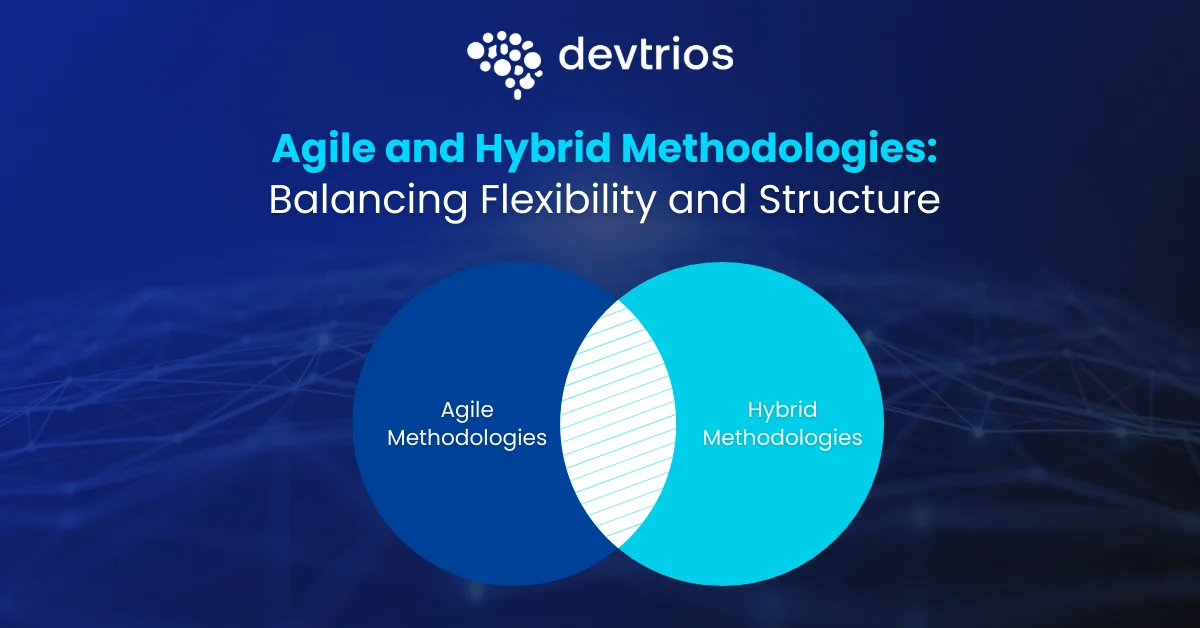
Choosing the right project management methodology is crucial for navigating the dynamic nature of app development. It dictates how your team plans work, collaborates, and responds to change. For most mobile app projects, rigid, traditional approaches are less effective than more adaptive models like Agile and hybrid methodologies.
These modern frameworks are designed to embrace change, foster collaboration, and deliver value incrementally. Selecting the right one depends on your project’s complexity, stakeholder needs, and organizational culture.
The Basics of Agile Methodology
Agile is an iterative approach to project management that focuses on breaking down large projects into small, manageable tasks completed in short cycles called sprints. This allows for continuous feedback, rapid adaptation, and consistent delivery of a functional product.
Key components of the Agile process include:
- Sprints: Short, time-boxed periods (usually 1-4 weeks) during which the team works to complete a set amount of work.
- Scrums (Daily Stand-ups): Brief daily meetings where team members share what they completed yesterday, what they will work on today, and any obstacles they face.
- Retrospectives: Meetings held at the end of each sprint to reflect on what went well and what could be improved, fostering a culture of continuous improvement.
Agile works best when the project requirements are expected to evolve. Its flexibility is ideal for innovative apps where user feedback can significantly shape the final product. It thrives in environments where close collaboration between cross-functional teams is possible.
When a Hybrid Approach is Better
A purely Agile approach may not fit every organization or project. A hybrid methodology combines the flexibility of Agile with the upfront planning and documentation of more traditional models, like Waterfall. This balanced approach provides a structured roadmap while still allowing for iterative development.
A hybrid model is often the best choice when:
- Projects have fixed budget or compliance requirements that demand detailed initial planning.
- Stakeholders require a clear, long-term project timeline and defined deliverables from the start.
- The core functionality of the app is well-understood, but there is still a need for flexibility in user interface design and user experience features.
This approach offers a practical middle ground, providing the stability of a clear plan with the adaptability needed to build a successful and relevant mobile application. It balances the need for governance with the reality of iterative product development.
Risk Management & Compliance: Protecting Your Project
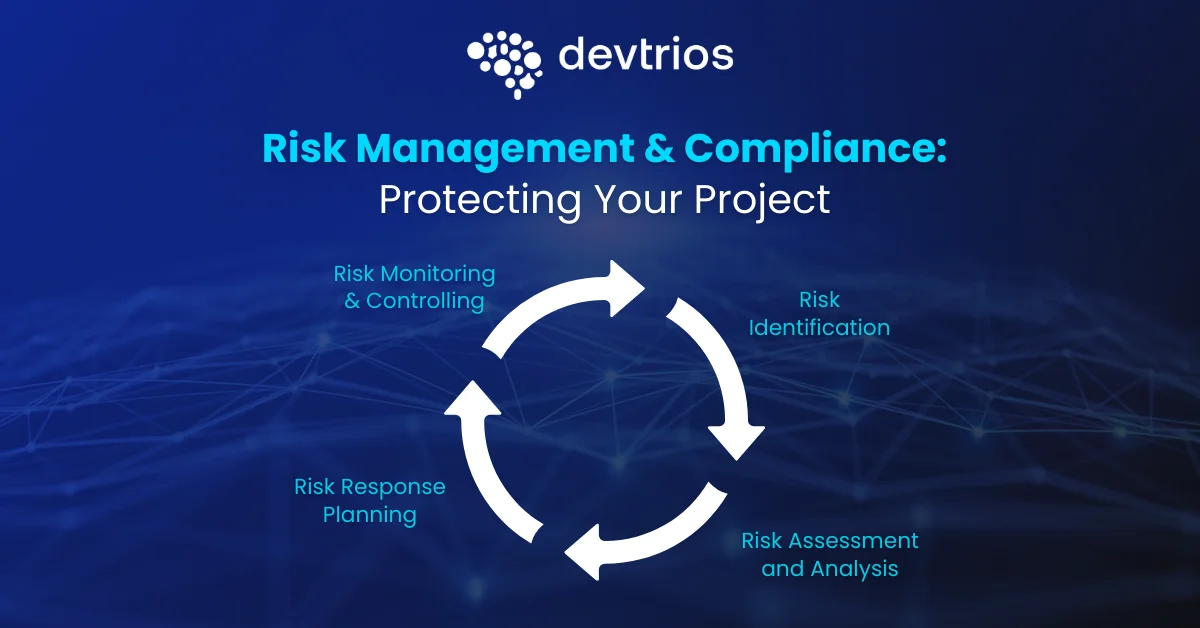
Effective project management involves more than just planning for success; it also requires preparing for potential failures. Risk management is the proactive process of identifying, assessing, and mitigating threats that could derail your app development project. A structured approach to handling risks ensures that you can respond to challenges effectively instead of reacting to crises.
Alongside managing project risks, awareness of legal and regulatory compliance is non-negotiable. Failing to adhere to data privacy laws and other regulations can lead to severe financial penalties and damage to your brand’s reputation.
Common Risk Categories in App Development
Risks can emerge from any area of the project. By categorizing them, teams can better anticipate and plan for potential issues.
- Budget Risks: The possibility of costs exceeding the allocated budget. This can be caused by inaccurate initial estimates, scope creep, or unforeseen technical challenges that require more resources.
- Security Risks: Vulnerabilities in the app’s code or infrastructure that could lead to data breaches or other security incidents. This includes insecure data storage, weak authentication, or non-compliance with privacy regulations.
- Communication Risks: Breakdowns in communication between stakeholders, the project manager, and the development team. Misunderstandings can lead to rework, missed deadlines, and a misaligned final product.
- Scope Risks: Uncontrolled changes or additions to the project’s features (scope creep). This is one of the most common risks, directly impacting both the timeline and budget if not managed properly.
The Risk Register: Your Central Hub for Tracking Threats
A risk register is a simple yet powerful document used to track identified risks throughout the project lifecycle. It serves as a central log where each potential risk is recorded, analyzed, and assigned a mitigation plan. For each identified risk, the register should include its description, likelihood, potential impact, and the planned response. This tool provides transparency and ensures accountability for managing threats.
Contingency Planning for the Unexpected
Not all risks can be prevented. Contingency planning involves creating a “Plan B” for high-impact risks. This means setting aside a portion of the budget or timeline to deal with unforeseen problems. For example, if a key developer leaves the project, a contingency plan might involve having resources available to quickly onboard a replacement. These plans provide a safety net, allowing the project to absorb shocks without being completely derailed.
Compliance and Data Privacy Awareness
In today’s digital landscape, compliance is a critical component of risk management. Apps that collect user data must adhere to regulations like GDPR in Europe or CCPA in California. From the very beginning of the project, you must consider:
- What user data will be collected?
- How will this data be stored and protected?
- How will you obtain user consent?
Building privacy-by-design principles into your app is not just a legal requirement but also a way to build trust with your users. Ignoring compliance can result in significant fines and irreparable damage to your app’s credibility.
Team & Communication Management: Aligning for Success
A talented team is at the heart of any successful mobile app, but talent alone is not enough. Effective project management requires clear roles and a structured communication plan to ensure everyone is aligned and moving in the same direction. When team members understand their responsibilities and information flows freely, collaboration thrives and costly mistakes are avoided.
This structure eliminates confusion and empowers individuals to focus on their specific contributions, creating a more efficient and productive development environment.
Core Roles in App Development
While team composition can vary, most successful app projects include a set of core roles, each with distinct responsibilities.
- Project Manager: The central coordinator responsible for planning, executing, and monitoring the project. They manage the timeline, budget, and resources, facilitate communication, and mitigate risks.
- Product Owner: This role represents the business and user interests. The Product Owner defines the app’s vision, manages the feature backlog, and prioritizes work to deliver maximum value.
- Developers: The engineers who write the code and build the application. This group often includes specialists in frontend (user interface), backend (server-side logic), and mobile (iOS/Android) development.
- UI/UX Designers: These individuals are responsible for the app’s look, feel, and usability. They create wireframes, prototypes, and visual designs to ensure an intuitive and engaging user experience.
- Quality Assurance (QA) Analyst: QA analysts are responsible for testing the application to find and report bugs. They ensure the app is stable, performs well, and meets all functional requirements before it reaches users.
- DevOps Engineer: This role bridges the gap between development and operations. DevOps engineers manage the app’s infrastructure, automate the build and deployment processes (CI/CD), and ensure the application is scalable and reliable.
Establishing a Communication Cadence
Consistent and predictable communication is the glue that holds a project together. A well-defined communication cadence ensures that information is shared at the right time with the right people, keeping the project on track.
- Daily Stand-ups: Short, daily meetings (often 15 minutes) where the team briefly discusses progress, upcoming tasks, and any obstacles. This keeps everyone in sync and helps to quickly resolve blockers.
- Sprint Reviews: Held at the end of each sprint, this meeting is a demonstration of the work that has been completed. It gives stakeholders a chance to see the progress and provide valuable feedback on the functioning product.
- Transparent Reporting: Regular status reports provide a high-level overview of the project’s health to stakeholders. These reports should transparently cover progress against the timeline, budget status, and any significant risks or issues.
Quality Assurance & Continuous Delivery: Building a Reliable Product
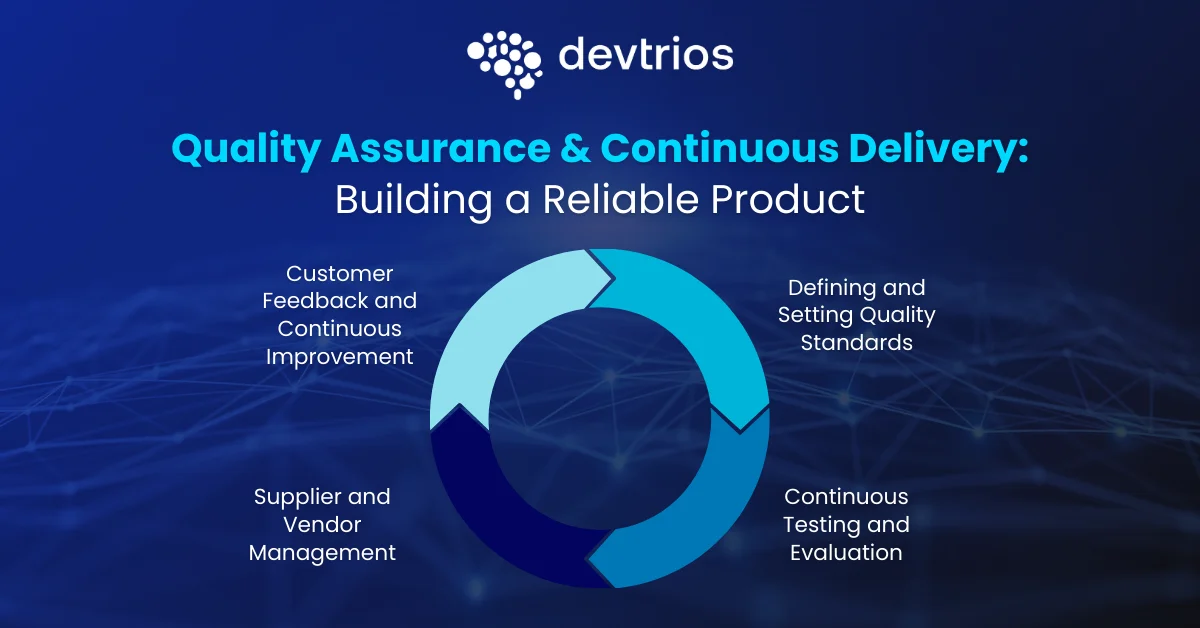
Quality is not a feature to be added at the end; it must be embedded throughout the entire development lifecycle. Integrating Quality Assurance (QA) from the start ensures that defects are caught early, when they are easier and cheaper to fix. This proactive approach to quality prevents last-minute scrambles and leads to a more stable, reliable, and successful application.
A commitment to quality is complemented by modern delivery practices. Continuous Integration and Continuous Delivery (CI/CD) automate the build, testing, and deployment processes, enabling teams to release high-quality updates to users faster and more predictably.
Integrating QA from the Beginning
Treating QA as a final step before launch is a recipe for delays and budget overruns. When testing is pushed to the end, developers are often forced to address a backlog of bugs under immense pressure. By involving QA analysts in the planning and design phases, they can help identify potential issues in requirements and user stories before a single line of code is written.
Essential Testing Types for Mobile Apps
A comprehensive QA strategy employs several types of testing to validate different aspects of the application.
- Unit Testing: This is the most basic level of testing, where individual components or functions of the code are tested in isolation to ensure they work correctly.
- Integration Testing: This phase tests how different parts of the app work together. It verifies that separate modules can communicate and function as a combined unit.
- Manual Testing: A QA analyst manually uses the application to find bugs, usability issues, and other defects that automated scripts might miss. This is crucial for evaluating the user experience.
Automated Testing: Repetitive and critical test cases are automated to run quickly and frequently. This frees up manual testers to focus on more complex, exploratory testing.
Continuous Integration & Continuous Delivery (CI/CD)
CI/CD is a set of practices that automates the software delivery pipeline.
Continuous Integration (CI) is the practice of developers frequently merging their code changes into a central repository. Each merge triggers an automated build and test sequence, allowing teams to detect integration issues quickly.
Continuous Delivery (CD) extends CI by automatically deploying all code changes that pass the testing phase to a testing or production environment. This makes releases a low-risk, frequent event rather than a high-stress, infrequent one.
The Role of Code Reviews
Code reviews are a critical quality control practice where developers review each other’s code before it is merged into the main codebase. This collaborative process helps improve code quality, catch potential bugs, enforce coding standards, and share knowledge among the team. It acts as a human-powered check to ensure the code is maintainable and well-written.
Analytics & Post-Launch Iteration: Driving Long-Term Growth
The launch of a mobile app is not the finish line; it is the starting line. A successful app must be treated as a living product that requires continuous attention and improvement, not a one-time project. Post-launch success depends on a structured process of analyzing performance, gathering user feedback, and iterating on the product.
This final phase of project management closes the loop, turning real-world data into actionable insights that drive future development efforts, enhance user satisfaction, and achieve long-term business goals.
Tracking the Right KPIs for Success
To understand how your app is performing, you must track the right Key Performance Indicators (KPIs). While vanity metrics like download numbers can be encouraging, they don’t tell the whole story. Focus on metrics that measure user behavior and app health.
- User Retention: This is arguably the most important metric. It measures the percentage of users who return to your app over time. High retention indicates that your app provides lasting value.
- Engagement: This KPI measures how actively users are interacting with your app. Metrics can include daily active users (DAU), session length, and feature adoption rates.
- Performance: Technical performance directly impacts user experience. Monitor metrics like app load time, crash rates, and battery consumption to ensure the app is stable and responsive.
Setting Up Analytics and Feedback Loops
You cannot track KPIs without the right tools and processes in place. Setting up an analytics platform (like Google Analytics for Firebase, Mixpanel, or Amplitude) before launch is essential. These tools allow you to collect, visualize, and analyze user data, providing a clear picture of how your app is being used.
Equally important is establishing feedback loops. These are channels through which you can gather qualitative insights directly from your users. Effective feedback mechanisms include:
- In-app feedback forms or surveys
- App store reviews and ratings
- Customer support tickets and inquiries
- Social media comments and community forums
Continuous Updates and Ongoing Support
The data from your analytics and the insights from your feedback loops should fuel a cycle of continuous improvement. This involves regular updates to fix bugs, enhance performance, and introduce new features that respond to user needs.
A dedicated plan for ongoing support and maintenance is critical. Users expect apps to be compatible with new OS versions and devices. Failing to provide timely updates signals that the app is abandoned, which quickly leads to user churn and negative reviews. A well-managed app project allocates resources for this long-term commitment, ensuring the app remains relevant and valuable for years to come.
Conclusion
Successfully navigating the mobile app development lifecycle requires more than a strong concept; it demands disciplined project management. From initial discovery and meticulous planning to proactive risk management and continuous post-launch iteration, each phase is critical. By embracing a structured framework that prioritizes clear communication, quality assurance, and user feedback, you transform a complex process into a predictable path to success. This strategic approach not only ensures you build the right product but also positions it for sustainable growth and long-term value in a competitive market.
Frequently Asked Questions (FAQs)
Agile is the most common methodology for app development due to its flexibility and iterative nature. It allows teams to adapt to changing requirements and user feedback. However, a hybrid approach that combines Agile's flexibility with some upfront planning from traditional models can be effective for projects with fixed budgets or strict compliance needs.
App development timelines vary widely based on complexity, features, and team size. A simple app with basic features might take 3-6 months. A more complex application with custom UI, backend integrations, and multiple platforms can easily take 9-12 months or longer from initial discovery to public launch.
Costs are typically estimated by calculating the total hours required for all project phases (discovery, design, development, QA) and multiplying that by the team's blended hourly rate. Factors like technical complexity, platform choice (iOS, Android, cross-platform), and third-party integrations significantly influence the final cost.
Launching is just the beginning. The post-launch phase involves monitoring app performance and user analytics, gathering feedback, and providing ongoing maintenance. Regular updates are necessary to fix bugs, support new OS versions, and release feature enhancements based on user data to ensure long-term success and user retention.
Prevent it by maintaining a keyword map, avoiding duplicate content topics, and regularly auditing rankings and URLs.
The discovery phase is critical for validating the app idea and defining its strategic direction before development begins. It involves market research and user interviews to confirm there is a real need for the product. Skipping this step is a common cause of failure, as it can lead to building an app nobody wants.
About the Author
This article is written by Ali Hamza, a digital strategist and technology writer with hands-on experience in product development, emerging technologies, SEO, and scalable digital systems. He focuses on translating complex technical topics into clear, practical guidance that helps readers make informed decisions.
Ali regularly researches consumer technology trends, software platforms, and digital optimization strategies, ensuring content accuracy, usability, and real-world relevance across a wide range of topics.
View Author Profile →